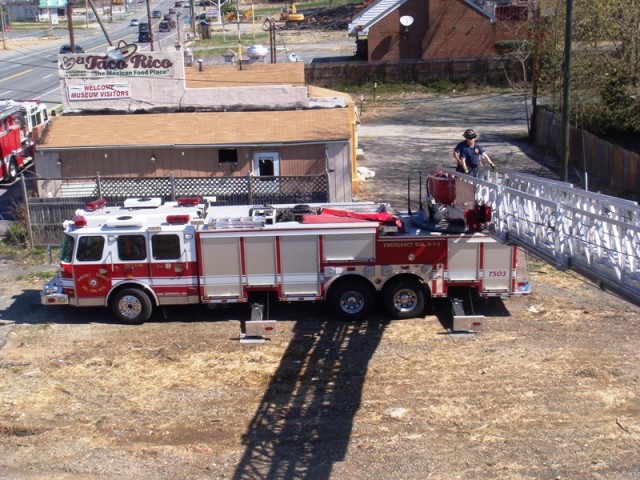
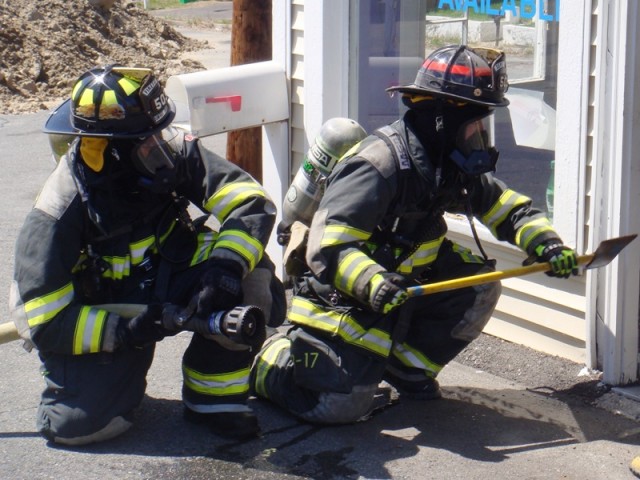
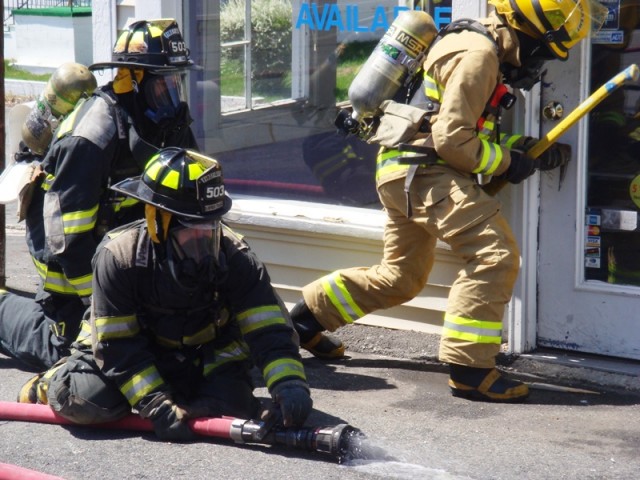
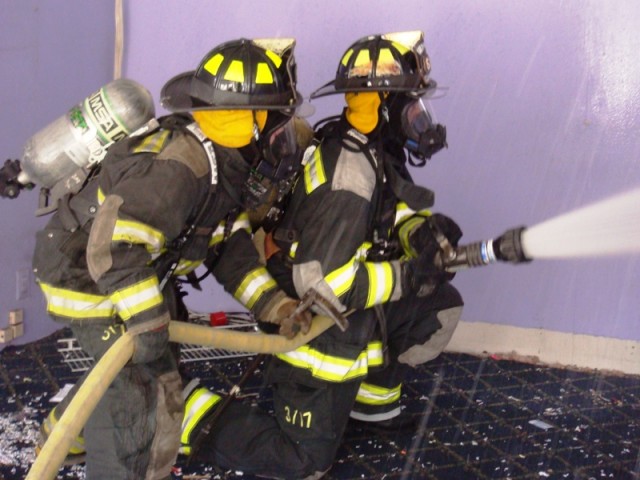
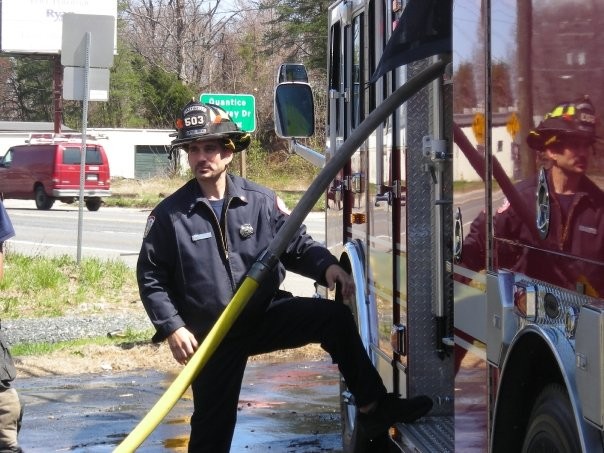
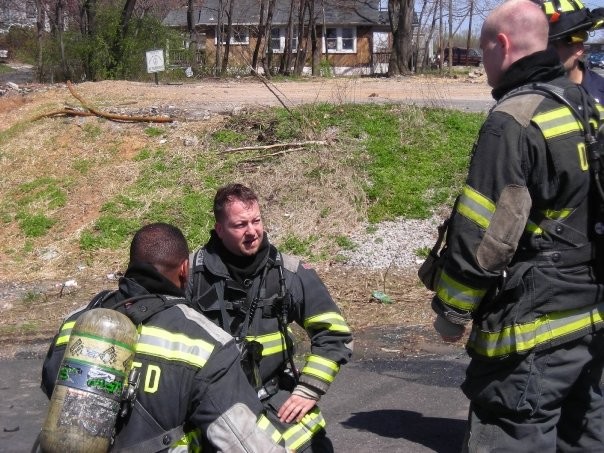
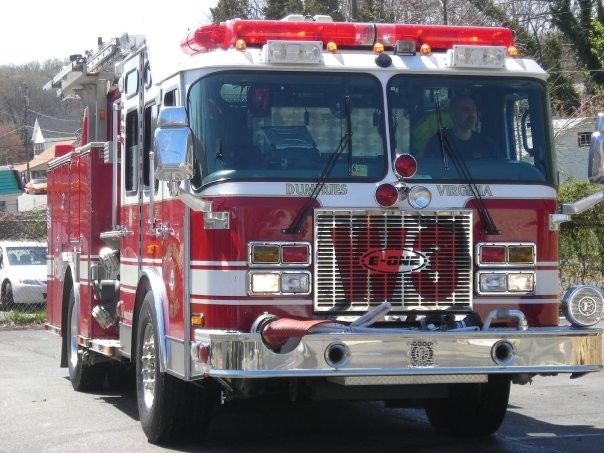
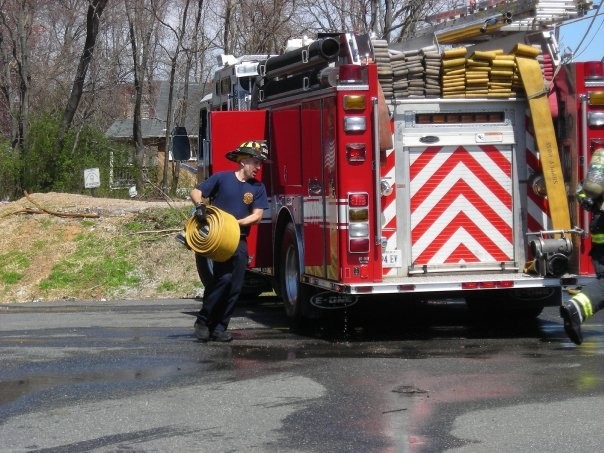
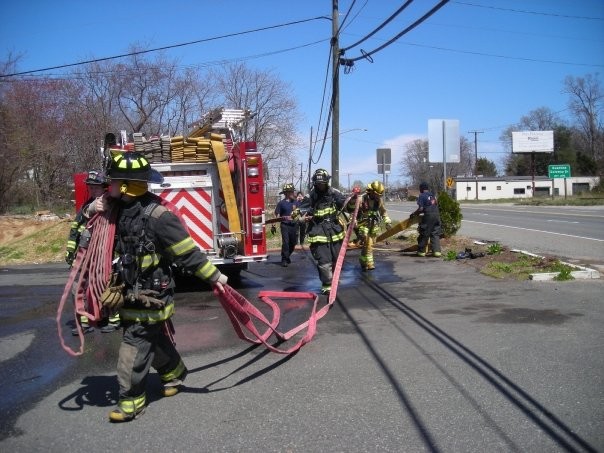
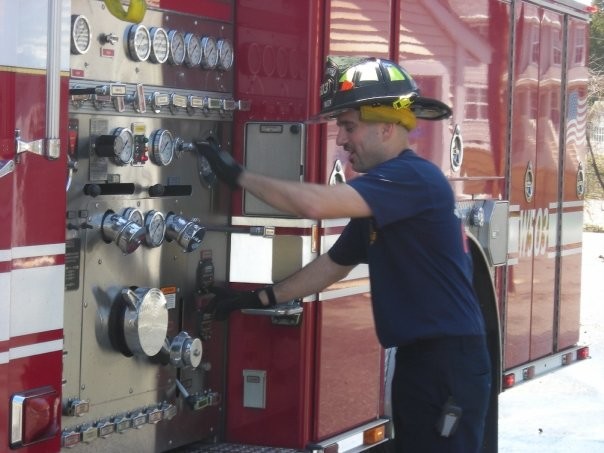
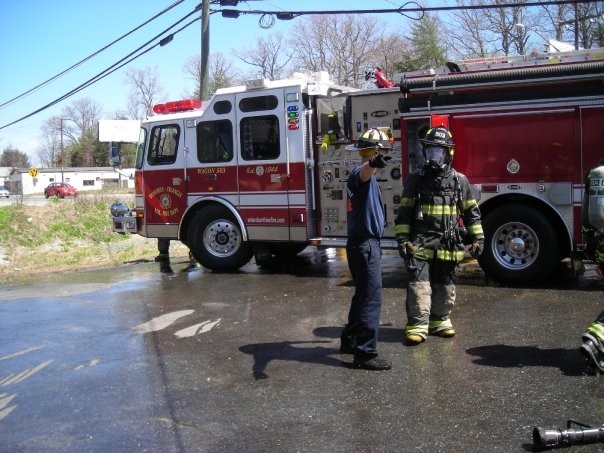
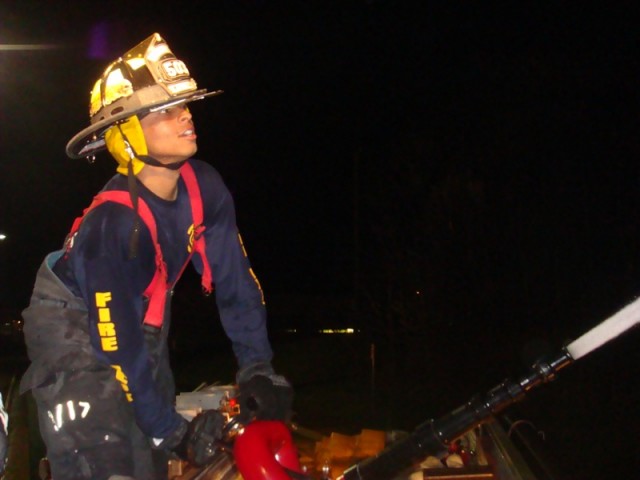
| DTVFD Firefighters took advantage of some great weather this weekend and conducted live training on both days. The training was split into several different scenarios with crews on Truck 503 and Engine 503 working together during evolutions over two days.
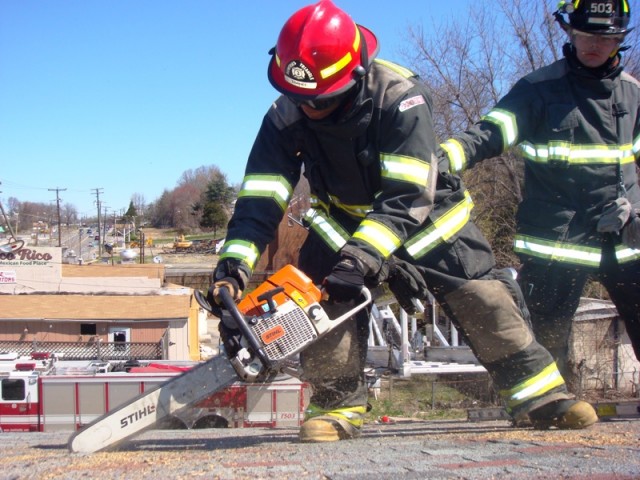
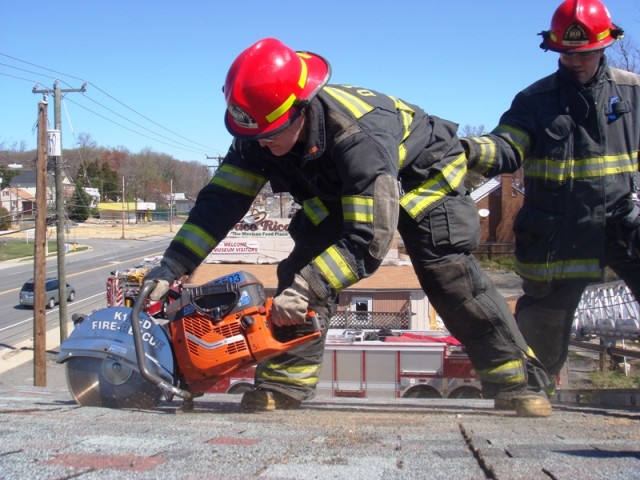
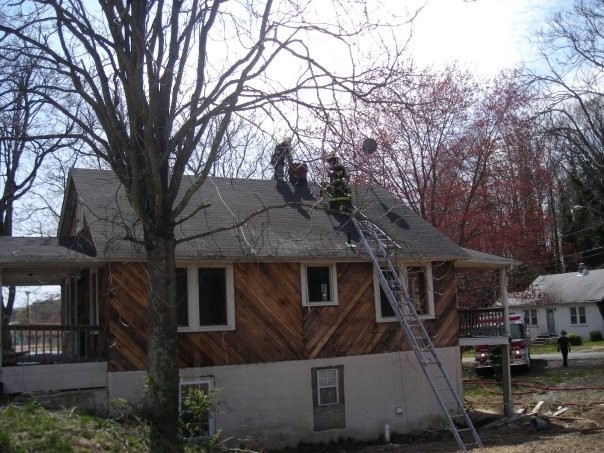
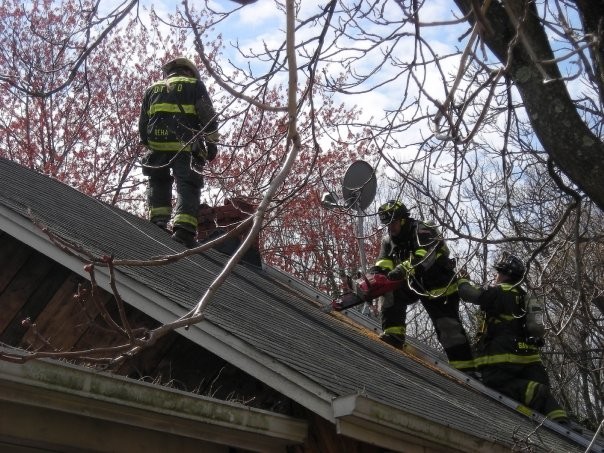
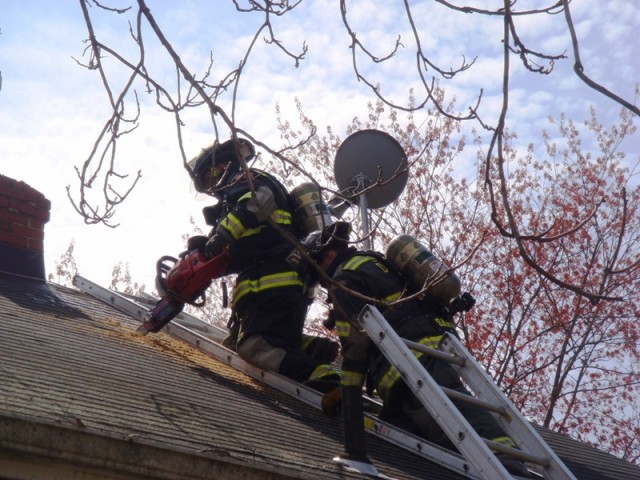
On Saturday, the engine crew, truck crew, and other personnel present were re-introduced to the fundamentals of roof-work, various saws, tools, and different ladder techniques with several veteran firefighters on-hand to instruct and answer questions.
With almost 40 years of combined experience Lieutenant Paul Reha, Rob Gudaitis, and Don Lynn, taught multiple members methods on how to safely accomplish truck-work and advanced level Rapid Intervention Team (RIT) techniques. After introductory roof and ladder training both crews spent some time breaching walls made out of various materials with various different saws and hand tools.
By putting some newly purchased equipment through some rigorous testing firefighters learned which tools and saws worked best on certain jobs saving them both time and fatigue. Firefighters had an opportunity to cut wood, plaster, ceramic, brick walls, concrete, stone, steel, and other composites.
One firefighter stated "The only way to know if the tool is any good is to put it to the extremes. We make sure it's as good as they [manufacturer] say it is". Firefighters can't assume anything when it comes to their equipment. Daily checks are made every shift change of every item on the vehicle.
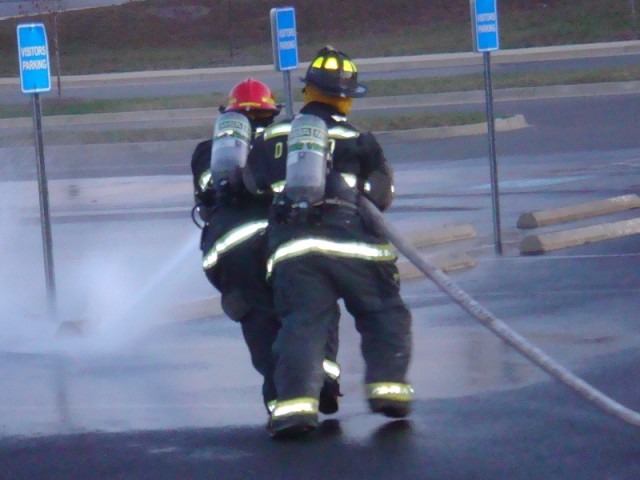
Training further consisted of Truck Operations in the morning and Engine Operations in the evening. All of this was done while the firefighters stayed available for and ran several calls. Once clear of the calls the crews eagerly returned to the training sites and resumed training where they left off.
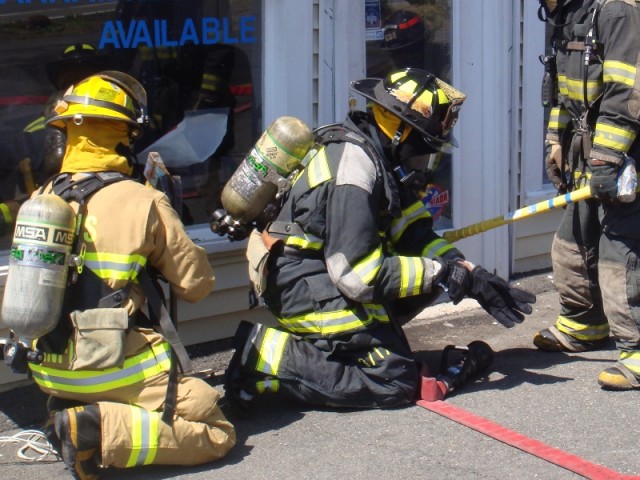
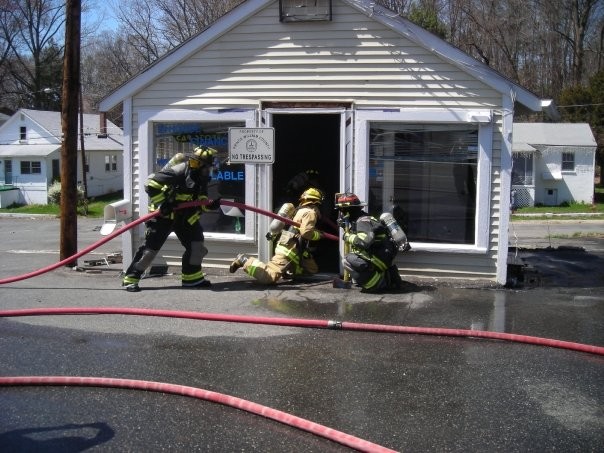
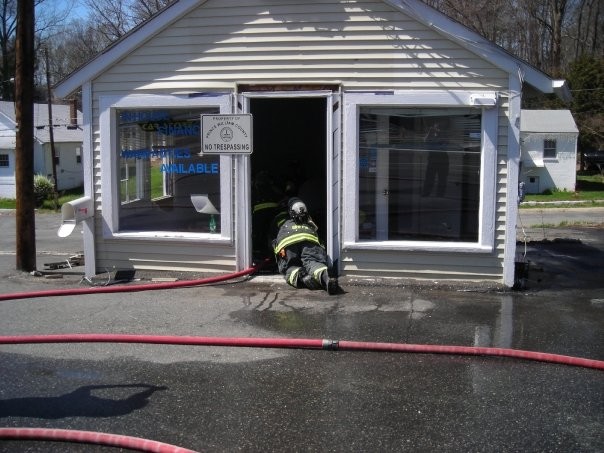
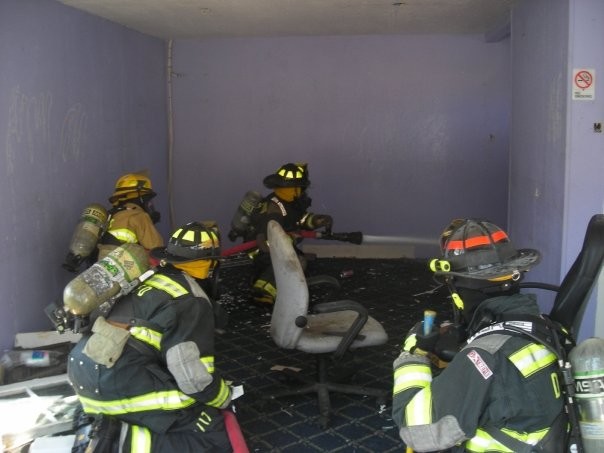
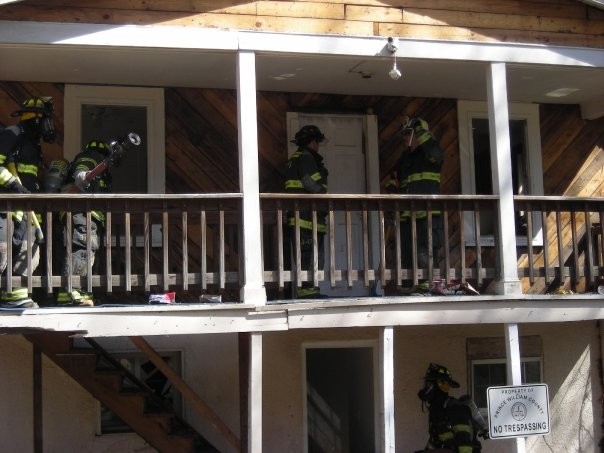
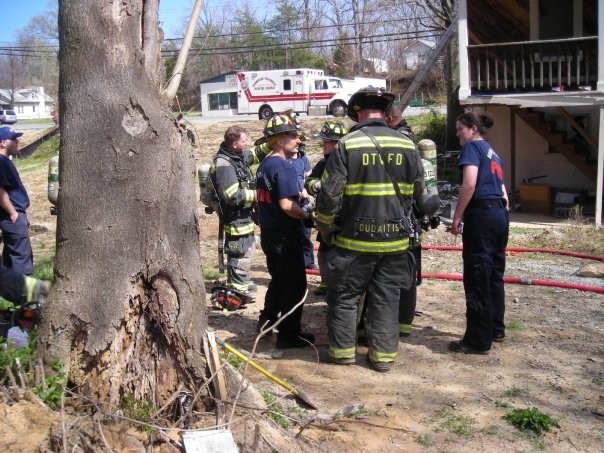
On Sunday, crews joined together and even combined with the Rescue Squad personnel from the same area. Abandoned stores and houses were used to conduct different training scenarios in a combined effort. The results were nearly flawless as multiple teams combined to accomplish tasks that they would perform in real world conditions.
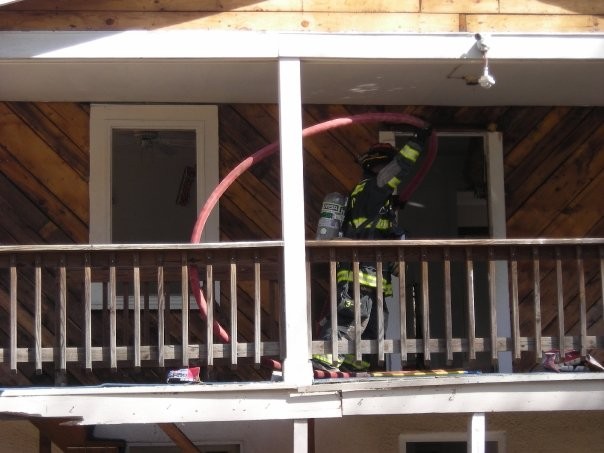
Full speed practice was accomplished as the crews arrived on the scene of the scenarios. The crew leaders immediately assessed the current situation and developed their strategy within seconds of arrival. Some members were told to deploy ladders as others pulled fire hoses. Doors were forced open and searches were immediately made with hose teams as protection. Simulated fires were attacked and roofs were cut open to imitate hot gasses and smoke escaping. An ambulance was even on stand-by to observe and as a safety precaution.
Sergeant Griffin had the opportunity to lead or evaluate different members of the Engine crew in several different scenarios putting different members in positions that they might not typically be accustomed to. In the real world, firefighters must quickly adapt to changing conditions and the likelihood of a member having to assume the roles of another sometimes happens at a moments notice.
Firefighters from other crews like Steve Jones and Steve Smith were also given the opportunity to train in different roles. For other firefighters like Julie Lankford, Angel Santiago, Tony Orlando, Nick Frezza, and Allin Valville; this refresher training was used to hone skills that aren't always used on a daily basis. Recruits Amanda Nevel, Anthony Frezza, and Jeff Lyons which are pending resident Level 1 training, received hands-on training that will provide them advanced knowledge of fire ground operations.
Once the scenarios were completed and after a couple of calls (and a quick meal); crews went back to individual training rehearsing car fire scenarios, forcible entry, and exposure protection techniques well into the evening. At around 9:30 PM both evenings everyone returned to the station to clean equipment and enjoy some much earned down-time. |